

As CUP’s Head of Humanities Books I’ve often found myself wrestling, over the last few years, with this question: what are the humanities for? It’s a question that seems ever more urgent because of the pressure which the humanities subjects are under in higher education. Student numbers are falling, university courses are being cut back, college departments are closing, lecturers are being made redundant, the smart money is going to STEM, and the very raison d’être of doing an arts degree at all is (sometimes rightly) being probed. Students need to know that the money they are spending on degrees now is going to be money well spent in future.
In this highly pressurised context, our Elements in Global Humanities series is a vital plank in showing why the humanities might continue to matter – in practical as well as existential terms – in the years and decades ahead. The Elements programme of which it is part was set up to bridge the awkward gap between traditional book-length monographs and journal articles (hence our slogan ‘the best of books and journals’), thereby inhabiting the promising space between large research outputs (which often take years to write) and shorter pieces submitted to periodicals. At 20-30,000 words, Elements are brief enough to be easily digestible (thus bang on zeitgeist) but also substantial enough to have an enduring legacy. They are published fast – within three months, in both print and digital formats – and for the first fortnight are available to download anywhere, by anyone with access to a computer and the Internet, completely free. The Global Humanities project is a major component of this wider Elements programme. It does all the bridging of our other Elements series while also explaining not just what’s singular about the humanities but how they can remain fresh and vital for life in the twenty-first century.
In investigating the value of the humanities, our series situates that broader discussion in a globalizing and globalized world that is also more fragmented and divided than ever before. Our University’s Global Humanities Network (out of whose work the series has emerged) is forging new relationships and partnerships from around the planet which offer a much greater diversity of voices than is often found in projects of this kind, and which attempt too to address some of most pressing concerns of our age: whether (just for example) AI, climatic breakdown, drought, famine, the migration of peoples, and the spectres of war, populism and pandemics. Our series shows not just that the humanities are valuable in themselves as heritage repositories of accumulated human knowledge; but also that, when looked at on a global canvas – and when drawing on the comparative wisdom of different but complementary cultures and communities – they can actually help to solve some of humanity’s wider and seemingly most intractable problems. It is that focus on pragmatic issues – on the particular as well as the general, and on the local within the global – that I hope will show precisely not just why the humanities continue to matter in education but why without them our lives would be very considerably diminished.
If you are interested in contributing to the series please contact: [email protected]
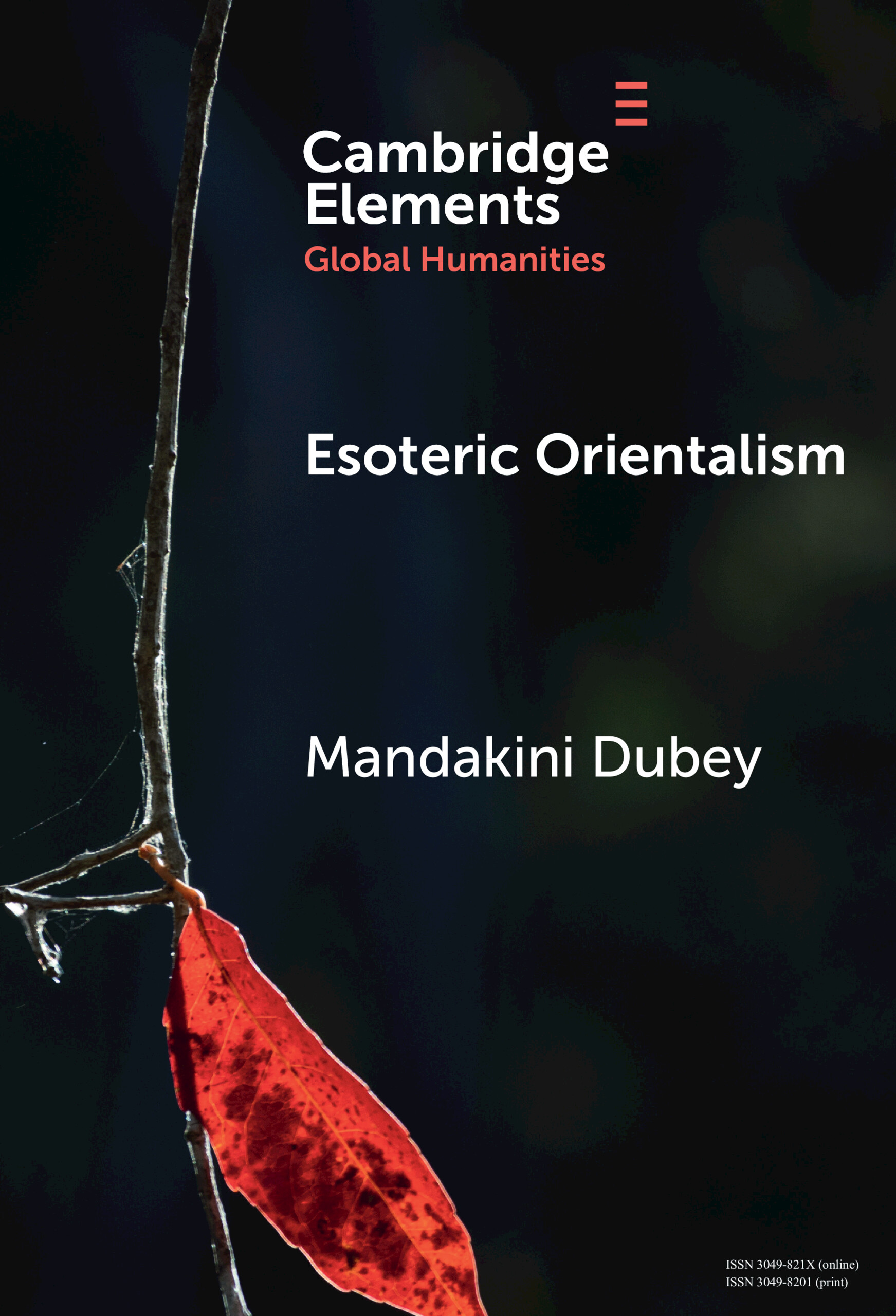

“Esoteric Orientalism” – By Mandakini Dubey
Esoteric Orientalism studies Victorian esotericism and academic Orientalism as the nineteenth century’s most significant comparative frameworks for understanding global religions, languages, and cultures. Occultist formations like the Theosophical Society (led by Helena Petrovna Blavatsky) and Orientalist disciplines like philology and comparative religion (as exemplified by Friedrich Max Müller) both believed in the essential kinship of East and West, routed through the Aryan family hypothesis—generating new visions of race and caste even while expanding the category of self. Still, theosophy and philology shared a contentious relationship. Blavatsky’s writings anticipate postcolonial commentary in critiquing Orientalist scholarly presumption; her fantastical citational practices hold a mortifying mirror to academic Orientalism. Ultimately, this study traces how heterogeneous, riven, and powerfully consequential the larger discourse of Orientalism could be. Esoteric Orientalism combines broad historical narrative with literary close reading, recasting Theosophy as a speculative and imaginative construct through which to read Orientalist discourse more broadly.
Published online by Cambridge University Press: 23 June 2025
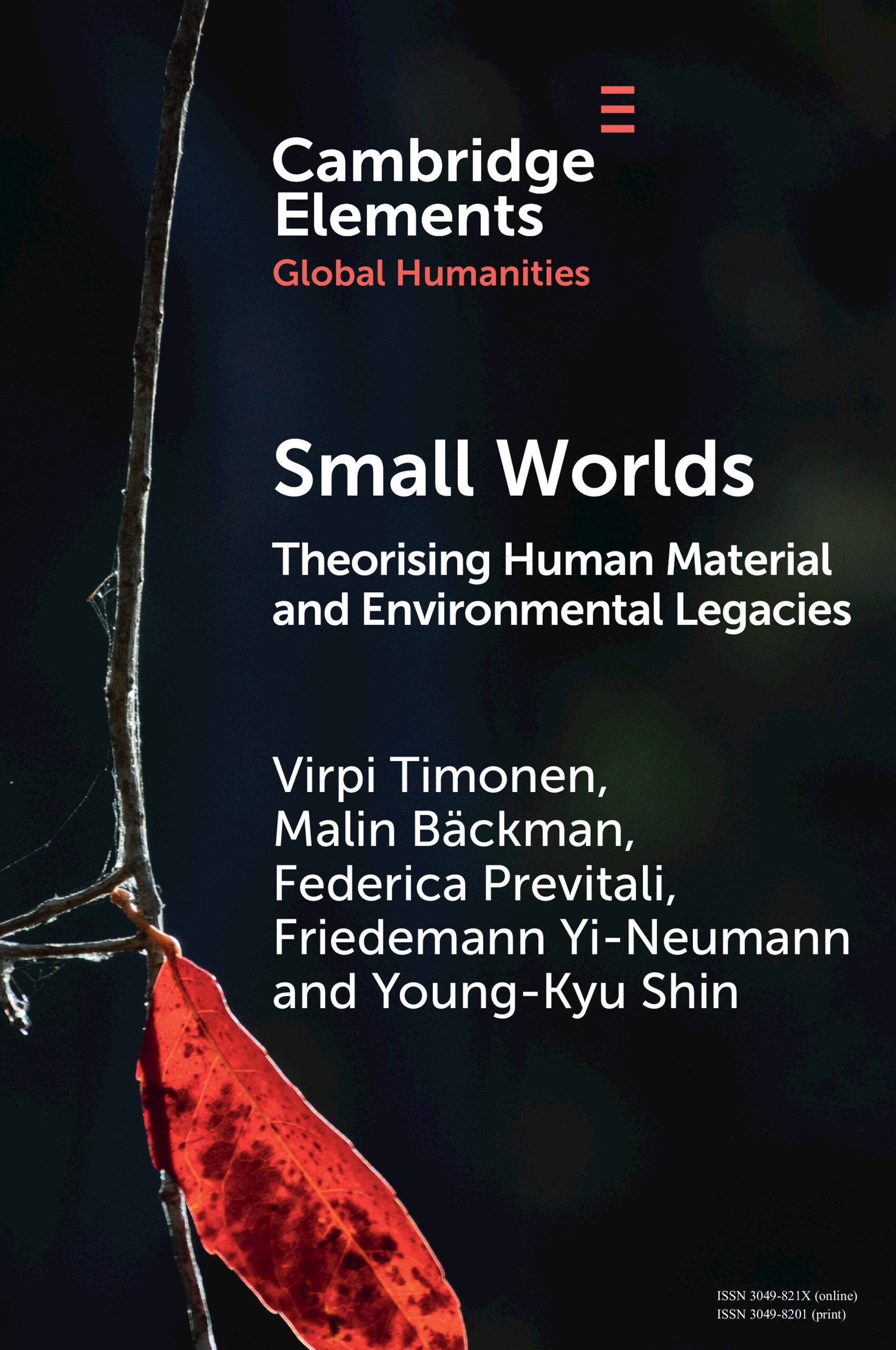
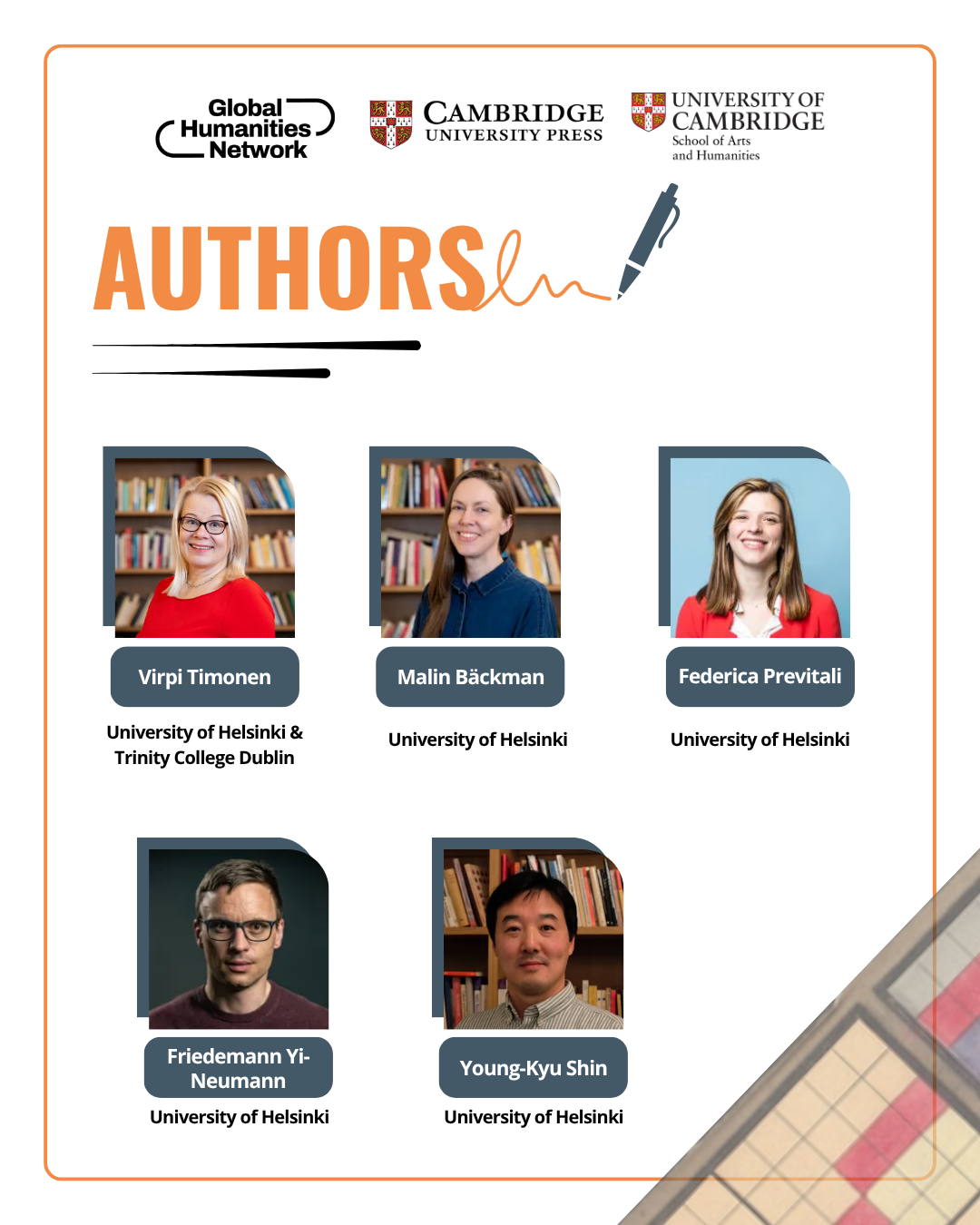
“Small Worlds: Theorising Human Material and Environmental Legacies” – by Virpi Timonen,Malin Bäckman, Federica Previtali, Friedemann Yi-Neumann and Young-Kyu Shin
This Element introduces the concept of legacy-making: future-oriented actions and ideation concerning the material and environmental effects that humans leave behind with reference to their eventual demise. Interviews conducted in Italy, Sweden, South Korea, and the United States are drawn upon to illuminate material environmental relationalities and entanglements constructed through everyday legacy-making practices. Material and environmental legacies are made by people within the small worlds of their environments and kinship structures, yet they are also connected to the small world of shared global practices and processes that engender the biggest challenges of our time: socio-economic inequalities, environmental degradation, and climate change. This title is also available as open accesson Cambridge Core.
Published online by Cambridge University Press: 24 July 2026
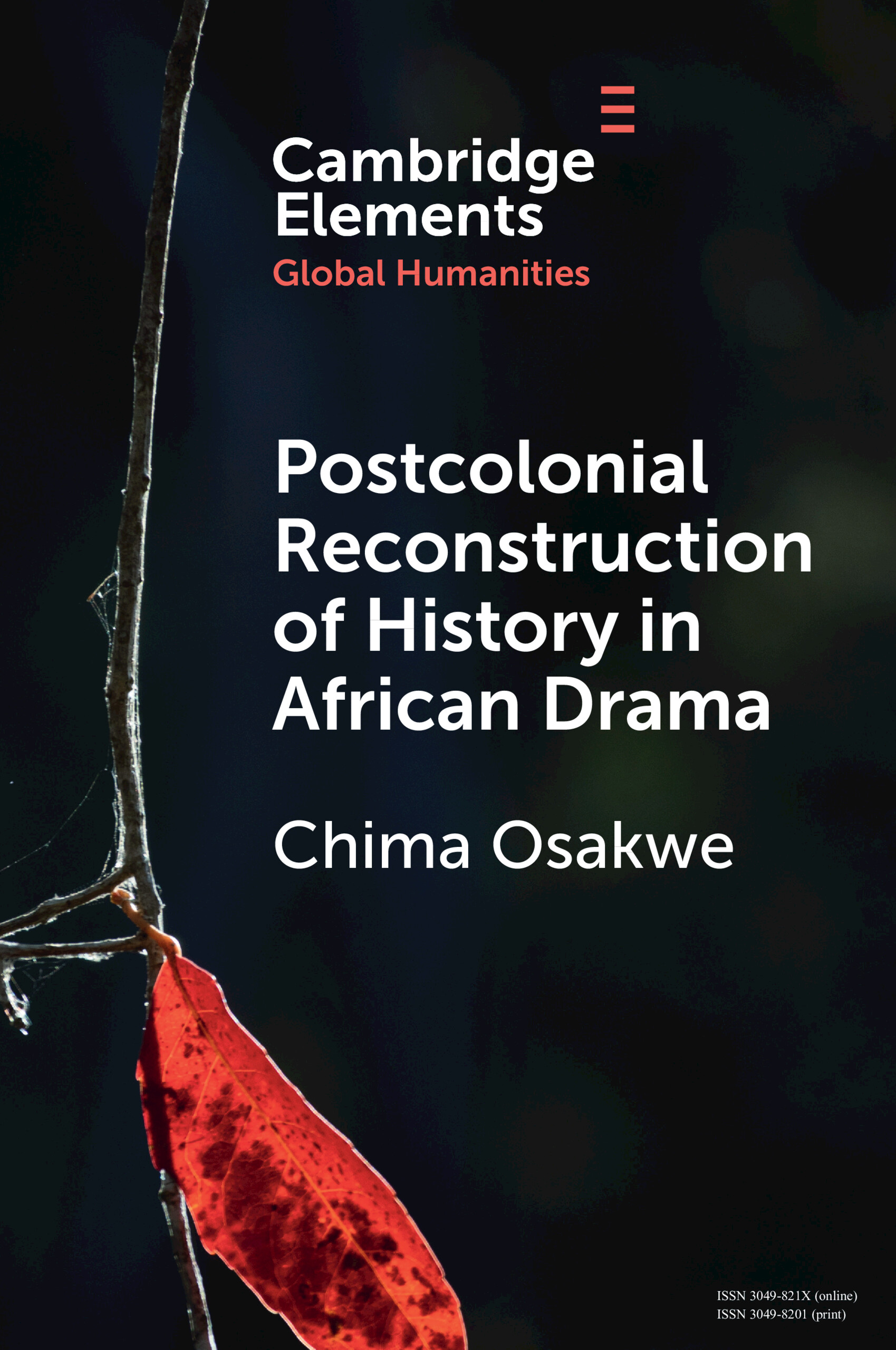
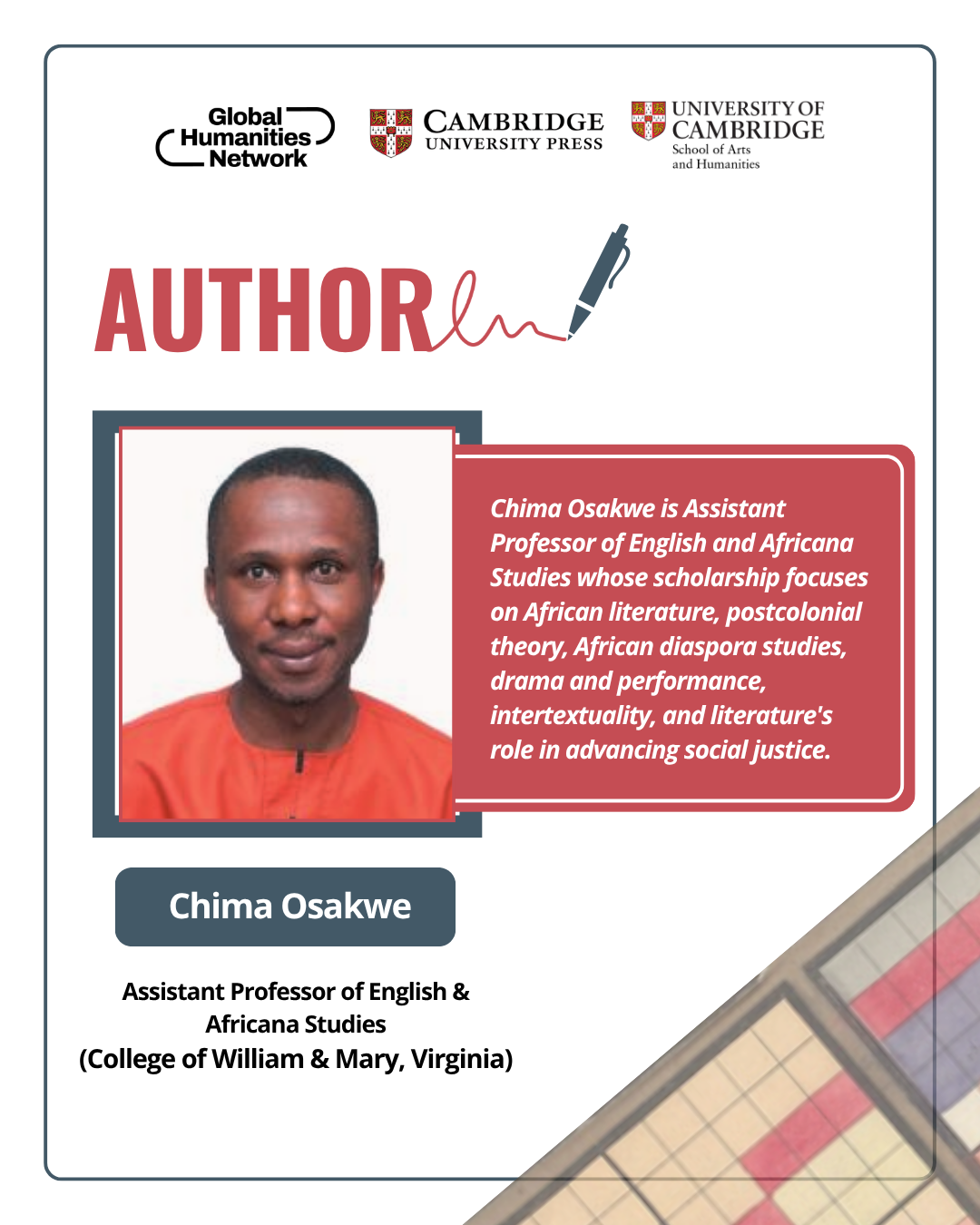
“Postcolonial Reconstruction of History in African Drama:Soyinka, Ngũgĩ with Mugo, Hussein, and Johnson by Chima Osakwe
This Element investigates how selected postcolonial African writers have adapted or rather reshaped historical sources for dramatic compositions. The writers and works the author focuses on are: Wole Soyinka (Death and the King’s Horseman, 1975), Ngũgĩ wa Thiong’o with Micere Githae Mugo (The Trial of Dedan Kimathi, 1976), Ebrahim Hussein (Kinjeketile, 1970), and Effiong Johnson (Not Without Bones, 2000.) Their reading of the plays emphasizes their status as postcolonial texts and not just works of African literature. In doing so, the Element is mindful of the fact that postcolonialism has inevitably involved the conceptualization of non-Western modes of thought as a means of challenging the West. The author’s central argument is that the selected postcolonial African authors use artistic licence to rewrite colonial history from below, transforming historical trauma into counter‑narratives that restore agency, dignity, and futurity to the oppressed.